
By Calum Littlejohn, ECV Nutrition
Angus Dowell and his wife Lauren are fifth generation farmers who have recently diversified into laying hens. In the summer of 2023, they built two 32,000 Morspan laying sheds with Big Dutchman 284 Natura internals and are currently in the process of building a third. They supply eggs to Farmlay which supplies some of the main supermarket retailers from its base in Strichen, Aberdeenshire.
Based at North Mains of Cononsyth near Arbroath, the Dowell Family’s main farming enterprises consist of arable crops and potatoes. They farm an 800-acre unit with additional contract farming and potato lets. Since 2011, Angus’s forward-thinking father John, has installed a wind turbine, solar panels and five biomass boilers to self-sufficiently power the farm in heat and electricity. They dry woodchip for local farmers and any excess power is exported to the grid.
The family also grow honeyberries for the Scottish Honeyberry Cooperative, with Lauren spearheading the various consumer-facing enterprises. These include a Sunflower Maze and a “Spud Hut” where they sell their potatoes, eggs and honeyberries. The sunflower maze brings thousands of families to visit the farm in July. Visitors can take photos, navigate the maze and pick honeyberries.
Laying hens are the first livestock on the farm for over 30 years. Angus explains that when they started the planning process in 2020, the egg market was struggling: “We’d always seen it as a long-term venture and the aim was just to make sure we were getting the most out of the hens and the market in every year, and now fortunately demand is high again.”
At the heart of the operation is a focus on nutrition to get quality eggs as well as healthy hens to lay for as many weeks as possible. Angus, who was a competitive curler and has always recognised the link between nutrition and performance, has been working together with ECV, his vet, Matt Balfour and breed rep James Wignall to tailor the feed rations to maximise egg quality and hen health.
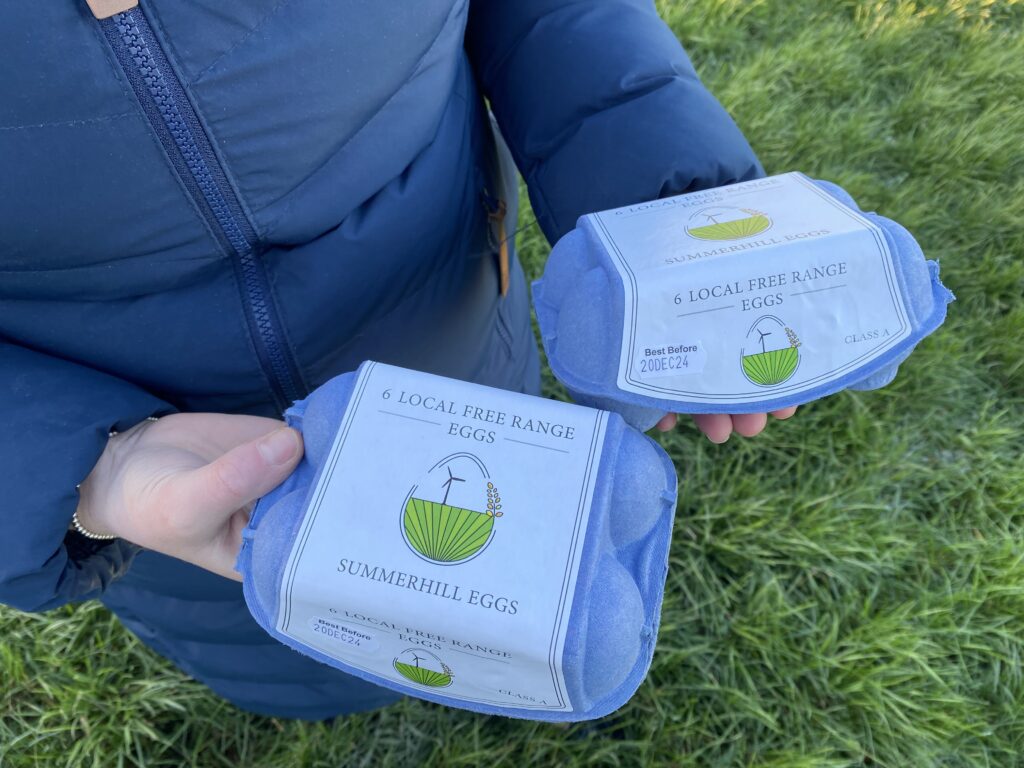
“As we are new to this, we are potentially more open to trialling different things to see where we get results. Our main goal was to see if we could extend the laying time of the hens from about 70 weeks to 85+ weeks, without compromising the hen’s health and welfare or the quality of the eggs produced. It may have meant spending more on feed and additional additives but the return has more than paid that back. We’ve had good quality eggs and the hens are laying well into their 80th week so that positively impacts the overall margin.”
Working closely with ECV, the Dowells have tweaked the nutrition as they go, adapting the feed to suit what they need as they monitored hen and egg performance. Poultry feed needs to be consistent, easily digestible and have the right balance of nutrients. It also needs to be phased for each stage of lay. Delivering loads on a weekly basis has given this advantage, changes can be regular and fluid depending on how the hens are performing. These small adjustments can make all the difference to the longevity and ultimately the profitability of the flock.
Raw materials are regularly sent away for independent testing to identify the levels of nutrients present. This ensures accuracy when formulating rations. By working closely with industry experts and vets, it is a very collaborative approach that helps to get the best results.
At ECV, we aim to source 90% of the grain used for feed production from farms within 30 miles of the mill at Drumlithie. Aberdeenshire and Angus are areas well known for growing high quality wheat and barley so customers know that we are using good quality grain. At harvest, grain is dried and processed using renewable energy from the wind turbines and biomass. This adds to positive environmental story for customers to pass on to retailers alongside their own initiatives.
One of the five biomass boilers at North Mains of Cononsyth is used to heat the layer units. This has the dual advantage of drying the muck – locking in the ammonia to create better quality nitrogen for the fields and diminishing the smell – and keeping the temperature in the shed at a constant 21ºC. This controlled environment means the hens don’t need to respond to sharp changes in temperature which can affect how much they eat and lay, making it easier for the Dowells to plan rations.
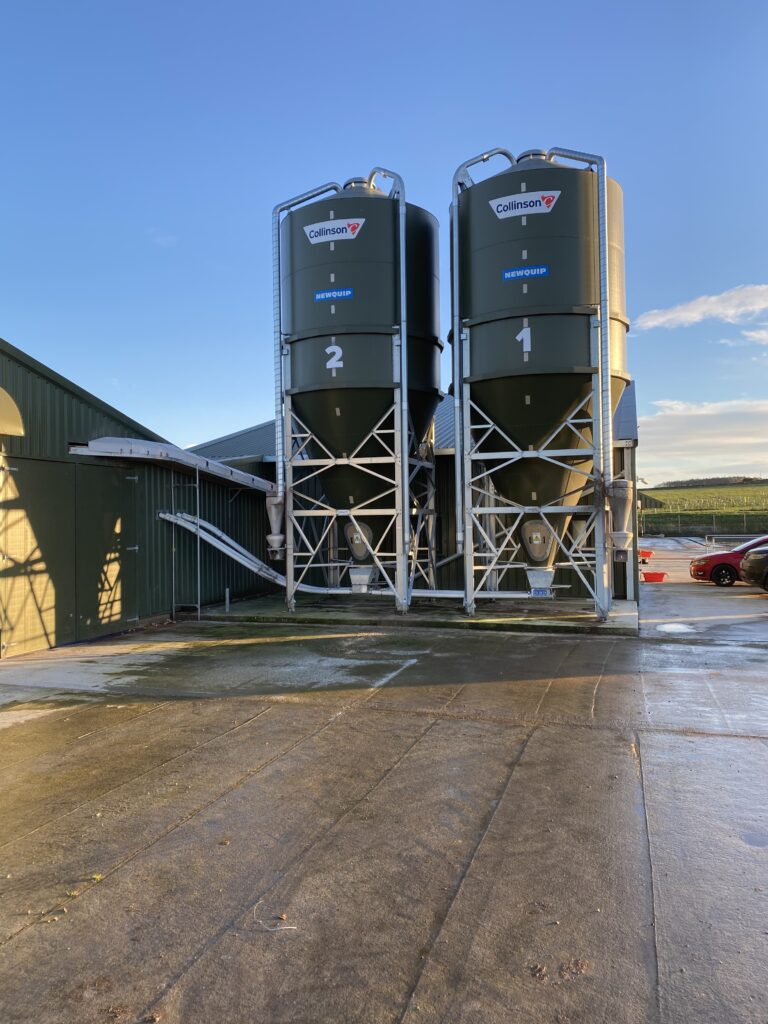
The egg contract pays weekly which is good for cash flow, says Angus, but it also means a flexible approach can bring immediate rewards. “We’ve learned a lot from this first batch which will inevitably guide the nutrition going forward. We’re learning it’s all about the overall egg mass, and it’s how you divide that up. What is great is working so closely with East Coast Viners and being able to constantly tailor as we go. We started off with a smaller egg than we would have liked but managed to tweak the feed to help increase the weight without letting the size run away from us.”
The new egg sheds have created employment for two full-time and two part-time employees, who collect the eggs as well as manage the sheds. They walk the sheds routinely to reduce the amount of floor eggs while also keeping on top of bird health and welfare. Lauren commented, “We are very lucky to have a young enthusiastic poultry manager, Ollie, and the fantastic team that work alongside him.”
The Dowells are also in the process of building a muck store, as part of SEPA recommendations, to keep the manure dry for later use on the farm. This helps reduce the wet mess that it can become if stored in the field. By using the hen muck, they have been able to halve the amount of synthetic fertiliser applied to their spring cereal crops.
Going forward, Angus is looking to use more of the cereals grown on the farm for the hen feed. Using our feed lorries, we will be able to backload the grain after the feed deliveries. This allows for better utilisation of our vehicles and improves the sustainability for both ECV and the customer. This will allow Angus to have greater control of his feed costs by making the most of home-grown cereals.