

By Steven Eddie, ECV Nutritionist
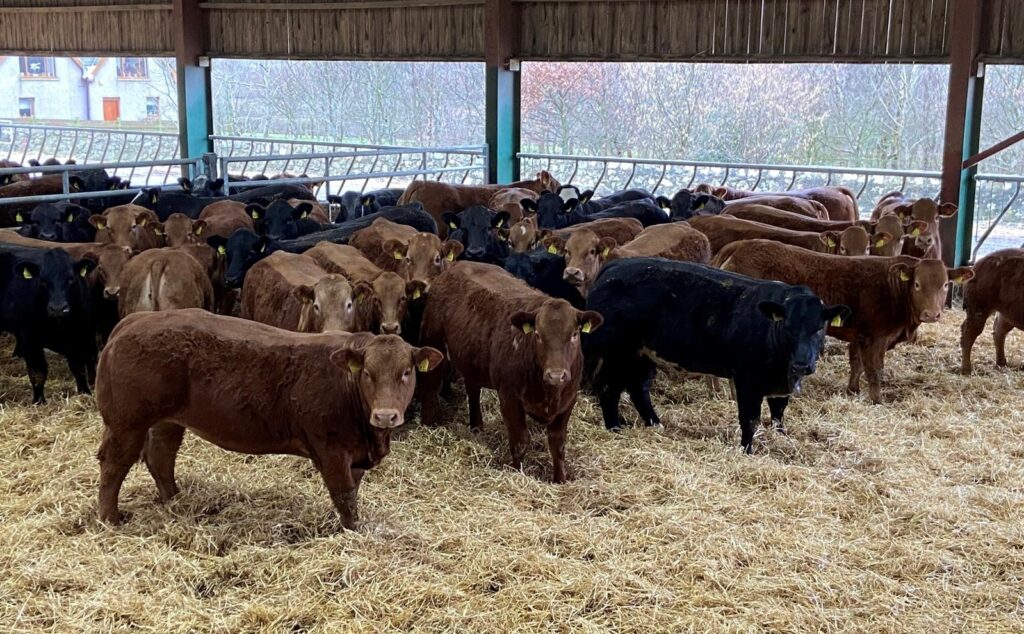
Making the most of home-grown cereals and forages is key to efficient and cost-effective rearing of beef cattle. It is important to consider the quality and quantity of farm produced feeds when planning for the winter ahead. By working in partnership with East Coast Viners, our nutritionists and feed advisors are always happy to discuss and help with your farm costings, ration formulations and forage budgets for getting the most from your stock.
A good starting point when considering winter feed plans is getting home produced forages analysed. Pit and baled grass silages and wholecrops vary greatly so it is important to know their nutritional value to ensure cattle are not being over or under fed key parts of their diet such as energy or protein. Silage analysis is offered by ECV and can be arranged by speaking to a Nutritionist or Feed Advisor. Silage samples can be taken by a member of staff or alternatively sample kits can be posted out with instructions. Depending on the information required, silage can be sampled for several things. The standard test analysis includes dry matter (DM), crude protein (CP), metabolisable energy (ME) and pH. A more detailed analysis can be requested for vitamin and mineral breakdown which can help when choosing minerals for total mixed rations.
Silage can make up anywhere from 30-100% of a beef ration over the winter period therefore it is essential to know what you are feeding. In high forage content diets, silage quality is key to improving animal output and saving costs whilst increasing profitability over the winter months. For instance, when feeding store calves over the winter months, if silage quality is high their daily requirements could be met from silage alone. If this is the case, savings can be made by reducing the amount of bought in or home grown concentrates that need to be fed.
For cattle on intensive finishing systems, cereals play a bigger part in the ration with most of the fibre part of the diet coming from straw. While it is important to budget forage supply throughout the winter, it is equally important to consider cereal supply too. It is important not to change rations too much throughout the winter, as it can take cattle time to adjust to these changes. When planning winter rations for cereals and forages, the main points to consider are how many cattle need to be fed, the duration that they will need to be fed and the available forage and cereal in storage on farm.
Having considered the quality and quantity of home-produced feeds, it is now time to evaluate what bought in feeds are available and going to suit your farming system. East Coast Viners can supply a full range of protein balancer blends and compounds as well as straights and minerals for customers wishing to home mix.
For farmers wishing to make the most of cereals grown on the farm, the ECV range of protein balancers has something to suit most systems. Farmers looking to transition calves off creep feeds and on to a grower ration, 20% Concentrate is a good all-rounder. A mix of straights like dark grains, sugar beet, malt pellets and wheatfeed along with the inclusion of a beef mineral can be mixed with barley at varying rates to give a desired protein depending on the requirements of the ration. This can be fed daily in troughs or added along with silage into the mixer wagon. For ad-lib systems, the 20% protein Barley Beef Balancer blend gives greater peace of mind as the inclusion of Acidbuf rumen buffer reduces the risk of acidosis.
If customers wish to use cereals at a greater inclusion rate, there are several higher protein balancer compounds which are available. These feeds are 34% protein and have a mineral inclusion that allows for mixing at rates of 4:1 with barley. This gives the mix an overall protein of 15% and still provides cattle with a full daily recommended intake of minerals. 34% Concentrate is a protein balancer that can be mixed at varying rates depending on the required protein. It is made up of high-quality vegetable proteins such as hipro soya, rapemeal and dark grains. It is suited for youngstock, growing and finishing cattle as well as being a great supplement in suckler cow rations to encourage milk production. For straw-based finisher systems, 34% Con + Urea is a cheaper alternative with the added urea aiding fibre breakdown. For finishers looking for a higher spec product, Premium 35% allows for an even greater cereal inclusion. A high spec mineral package that includes Xtract, Biosprint Yeast and Acidbuf rumen buffer allow for greater performance while ensuring increased safety.
As well as compound and blended feeds, ECV offer a full range of straights and raw materials available for delivery direct to farm or to collect ex Drumlithie. Our straights trader Iain Reid is on hand to discuss prices, markets and availability. Raw materials to consider for home mixing include hipro soya, rapemeal, dark grains and sugar beet. Working in partnership with ED&F Man, ECV can supply bulk liquid feeds such as straight molasses and molasses blends that contain regulated release urea for increased protein. A full range of minerals suitable for growing and finishing cattle is also available to complement home mixes.
Whatever your farming system, value for money is the most important thing to consider when buying anything. For feed, value comes from the cost per kilo of daily liveweight gain. The feed that gives you the lowest cost per kilo gained is unlikely to cost the least per tonne but may be the most economic to use in the long run. Always read the label! Speak to an ECV Nutritionist or Feed Advisor to find out the best options for feeding your cattle this season.